
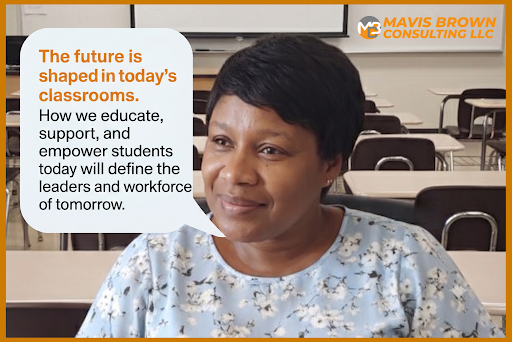
Every school year begins with expectations: academic goals, attendance targets, graduation requirements, and plans to prepare students for what comes next. But student success requires more than setting expectations. It requires intentionally creating the conditions in which students can thrive.
Students enter classrooms with different experiences, strengths, challenges, confidence levels, and support systems. Although educators cannot control every factor influencing a student’s journey, schools and communities can be intentional about the environments they create around them.
When leadership, expectations, relationships, and support work together, student success becomes more than an aspiration. It becomes something we actively design.
Clear Expectations Create a Foundation for Success
Students need to understand what success looks like.
Clear expectations provide direction, reduce uncertainty, and help students take greater ownership of their progress. However, expectations should do more than communicate rules or academic standards. They should help students understand both what is expected and how they can achieve it.
This requires educators and leaders to communicate consistently, provide meaningful feedback, recognize progress, and ensure students have access to the resources and support they need.
Accountability is important, but it is most effective when accompanied by clarity. Before asking why a student has not met an expectation, we should also ask:
Was the expectation clearly communicated?
Did the student understand what success looked like?
Did the student have the tools, resources, and support needed to achieve it?
Was meaningful feedback provided along the way?
These questions shift the conversation from simply measuring outcomes to intentionally creating the conditions that support achievement.
Emotional Intelligence Strengthens the Learning Environment
Education is fundamentally about people.
Students are more likely to engage, communicate, take healthy risks, and ask for help when they feel respected, understood, and connected to their learning environment. That makes emotional intelligence an essential educational and leadership competency.
Self-awareness, empathy, communication, relationship management, and the ability to navigate conflict can strengthen interactions among students, teachers, administrators, families, and community partners.
Emotional intelligence does not mean lowering standards or avoiding accountability. It means recognizing how relationships and communication influence a student’s ability to learn, grow, and respond to challenges.
High expectations and human-centered support can—and should—exist together.
Leadership Accountability Matters at Every Level
Student success cannot rest solely on classroom teachers.
School leaders influence culture. Teachers shape daily learning experiences. Counselors and support professionals help students navigate challenges and opportunities. Families reinforce development beyond the classroom. Community organizations provide additional opportunities for mentoring, enrichment, career exploration, leadership development, and belonging.
Leadership, therefore, is not limited to a title.
When the adults surrounding students demonstrate accountability, consistency, collaboration, and a commitment to growth, they model the behaviors we want young people to develop.
This requires asking not only, “What do we expect from our students?” but also:
“What must we expect from ourselves as the adults responsible for helping them succeed?”
Create a Culture Where Growth Is Expected and Supported
A strong school culture challenges students while helping them develop the confidence and skills needed to meet those challenges.
Students need opportunities to solve problems, make decisions, communicate effectively, learn from setbacks, practice leadership, and understand how their choices can influence their future. These experiences contribute not only to academic growth but also to workforce and life readiness.
Preparing young people for the future requires more than academic knowledge. Students will eventually enter workplaces and communities where they will need adaptability, emotional intelligence, accountability, resilience, communication, collaboration, and leadership.
Schools and youth-serving organizations have an important opportunity to begin developing these capabilities long before students enter the workforce.
Student Success Is a Shared Responsibility
The most powerful environments for student development emerge when educators, administrators, families, community organizations, and students understand that success is shared.
In these environments:
Growth is intentional. Students receive both challenge and support.
Belonging is experienced daily. Students know they are valued and connected.
Leadership is modeled at every level. Adults demonstrate accountability, consistency, and positive action.
Student voice matters. Young people are encouraged to participate in their development and decision-making.
Future readiness is intentional. Students develop the academic, interpersonal, leadership, and life skills needed to navigate what comes next.
No single program, teacher, administrator, or initiative can accomplish this alone. Sustainable student success requires collaboration, consistent leadership, and alignment around a shared purpose.
From Expectations to Empowerment
As we move through another school year, the question should not simply be whether students are meeting expectations.
We should also ask whether we have intentionally designed environments that give them the opportunity to exceed those expectations.
That requires leadership, collaboration, and accountability. It also requires recognizing that every interaction, policy, classroom experience, and support system contributes to the culture students experience.
Student success does not happen by chance. It happens by design.
When we intentionally create environments where young people are challenged, supported, valued, and empowered, we do more than prepare them to meet expectations.
We prepare them to exceed expectations—and to lead in the classroom, the workplace, and their communities.
